
.png)

 .
.
How Often Should You Visit a Dentist? A Complete Guide to Maintaining Healthy Teeth
Introduction
Your smile is one of the first things people notice, but keeping it healthy requires more than simply brushing your teeth twice a day. One of the most common questions patients ask is, "How often should you visit a dentist?" While many people assume they only need to schedule an appointment when they experience tooth pain or discomfort, this approach can lead to serious oral health problems that are both costly and difficult to treat.
The reality is that many dental issues, including cavities, gum disease, enamel erosion, and even oral cancer, often develop silently. By the time symptoms become noticeable, the condition may have progressed significantly. That's why preventive dental care is considered the foundation of lifelong oral health.
Routine dental visits allow your dentist to identify problems early, perform professional cleanings, remove plaque and tartar buildup, and provide personalized advice based on your oral health needs. These appointments not only help preserve your teeth but also contribute to your overall well-being. Research has shown that poor oral health has been linked to several systemic conditions, including heart disease, diabetes, respiratory infections, and pregnancy complications.
However, there isn't a one-size-fits-all answer to this question. Factors such as your age, oral hygiene routine, medical history, lifestyle, and existing dental conditions all influence how frequently you should schedule an appointment.
In this comprehensive guide, you'll learn the recommended frequency of dental visits, why regular checkups matter, who may need more frequent appointments, what happens during a routine dental examination, and practical tips to keep your smile healthy between visits.
Why Regular Dental Visits Matter
Many people believe that brushing, flossing, and using mouthwash are enough to maintain healthy teeth. While these daily habits are essential, they cannot completely remove hardened plaque (tartar) or detect hidden dental problems. Professional dental checkups complement your home care routine and ensure that small issues don't turn into major concerns.
During a routine visit, your dentist examines your teeth, gums, jaw, and soft tissues to detect any signs of disease. Even if your mouth feels healthy, cavities can develop between teeth, gum disease can progress without pain, and early-stage oral cancer may show no obvious symptoms.
Regular dental visits also help protect any existing dental work, such as fillings, crowns, bridges, implants, or veneers. Dentists can monitor these restorations and address minor wear before expensive repairs become necessary.
Benefits of Routine Dental Visits
Regular dental appointments help you:
Key Takeaway: Preventive dental care is almost always simpler, less expensive, and less invasive than treating advanced dental problems.
How Often Should You Visit a Dentist?
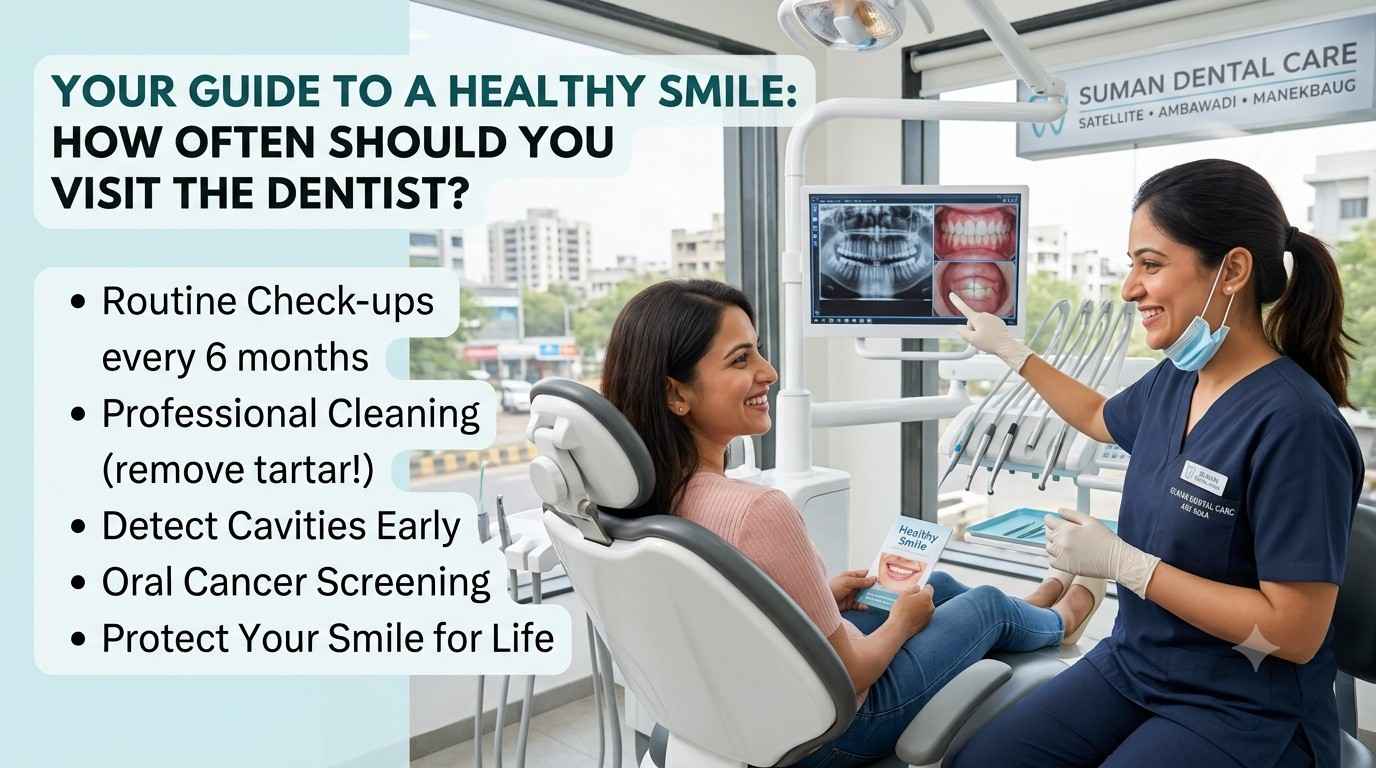
For most healthy adults and children, dentists recommend scheduling a routine dental checkup every six months. This schedule has become the standard because it allows dental professionals to monitor changes in your oral health while preventing plaque and tartar from accumulating excessively.
A typical six-month appointment includes:
When Six Months May Not Be Enough
Some people require more frequent dental visits—typically every three to four months. Your dentist may recommend shorter intervals if you:
Can Some People Visit Less Often?
Individuals with excellent oral hygiene, a low risk of cavities, healthy gums, and no significant medical conditions may only need annual dental examinations. However, this decision should always be based on your dentist's professional assessment rather than personal preference.
Factors That Affect How Frequently You Need Dental Checkups
No two patients have identical oral health needs. Several factors determine how often you should visit the dentist.
1. Age
Children benefit from regular dental visits because their teeth and jaws are still developing. Early checkups help prevent cavities, monitor proper tooth eruption, and establish healthy habits from a young age.
Older adults may require more frequent monitoring due to gum recession, dry mouth caused by medications, worn enamel, or age-related dental concerns.
2. Oral Hygiene Habits
People who brush twice daily, floss regularly, and maintain a balanced diet generally experience fewer dental issues. However, even excellent home care cannot completely prevent plaque buildup, making professional cleanings essential.
3. Medical Conditions
Several health conditions directly affect oral health, including:
These conditions can increase the risk of gum disease, delayed healing, and infections, making regular dental monitoring especially important.
4. Lifestyle Choices
Lifestyle habits also influence dental health. Smoking, vaping, excessive alcohol consumption, frequent sugary snacks, acidic beverages, and teeth grinding can significantly increase your risk of oral health problems.
5. Previous Dental History
If you've experienced multiple cavities, root canals, gum disease, or extensive restorative work in the past, your dentist may recommend more frequent visits to prevent future complications.
What Happens During a Routine Dental Visit?
Many people avoid dental appointments because they're unsure what to expect. Fortunately, routine dental checkups are simple, comfortable, and designed to prevent future problems.
Comprehensive Dental Examination
Your dentist carefully examines:
This examination helps detect cavities, gum disease, enamel wear, fractures, and other concerns before they worsen.
Professional Teeth Cleaning
Even with excellent brushing, plaque eventually hardens into tartar, which cannot be removed at home.
During a professional cleaning, your dental hygienist will:
Professional cleaning leaves your teeth feeling smoother and helps reduce the risk of gum disease.
Dental X-Rays
Not every visit requires X-rays, but when necessary, they help dentists detect:
Early detection allows for less invasive treatment.
Personalized Oral Health Advice
Before you leave, your dentist may recommend:
Signs You Should Visit a Dentist Immediately
While routine checkups are important, certain symptoms require immediate attention rather than waiting for your next appointment.
Schedule a dental visit as soon as possible if you experience:
Ignoring these symptoms can lead to infections, tooth loss, and more complex treatments.
Benefits of Regular Dental Checkups
Routine dental visits provide both short-term and long-term benefits.
Some of the biggest advantages include:
Research also suggests that maintaining good oral health may help reduce the risk of certain systemic diseases by minimizing chronic inflammation and bacterial infections.
Tips for Maintaining Good Oral Health Between Visits
Dental appointments are only part of maintaining a healthy smile. Your daily habits play an equally important role.
Follow these simple practices:
Consistency is the key
to preventing most dental problems.
Frequently Asked Questions
1. Is visiting the dentist every six months really necessary?
For most people, yes. Six-month visits allow dentists to identify problems early and provide professional cleaning before plaque buildup leads to cavities or gum disease.
2. Can I wait until I have tooth pain?
No. Many dental problems, including cavities and gum disease, progress silently. Waiting until you experience pain often means the condition has become more serious.
3. Do children need dental checkups every six months?
Absolutely. Regular visits monitor tooth development, prevent cavities, and help children become comfortable with dental care.
4. Are professional dental cleanings worth it?
Yes. Professional cleanings remove hardened tartar that brushing and flossing cannot eliminate, reducing the risk of gum disease and tooth decay.
5. Does dental health affect overall health?
Yes. Poor oral health has been linked to conditions such as diabetes, cardiovascular disease, and respiratory infections, making preventive dental care an important part of overall wellness.
Choosing the Best Dental Clinic in Ahmedabad
If you're looking for the Best Dental Clinic in Ahmedabad, choosing a clinic that offers preventive care, modern technology, experienced dentists, and personalized treatment is essential. Patients living in Satellite, Ambawadi, and Manekbaug should look for a dental clinic that focuses on early diagnosis, patient comfort, and long-term oral health rather than only treating emergencies.
Whether you're searching for the Best Dental Clinic in Satellite, Ahmedabad, the Best Dental Clinic in Ambawadi, or the Best Dental Clinic in Manekbaug, Ahmedabad, regular dental checkups with a trusted dentist can help prevent expensive treatments in the future.
Conclusion
Visiting your dentist regularly is one of the best investments you can make in your health. Although the general recommendation is to schedule a dental checkup every six months, your ideal visit frequency depends on your oral health, medical history, lifestyle, and individual risk factors.
Routine examinations and professional cleanings help detect problems early, prevent costly dental procedures, and maintain healthy teeth and gums for years to come. They also provide valuable guidance on improving your oral hygiene routine and addressing concerns before they become serious.
Remember, good oral health doesn't happen by chance—it requires consistent care at home and regular professional support. If it's been more than six months since your last dental appointment, consider scheduling a visit today. A simple checkup now can save you from discomfort, expensive treatments, and unnecessary complications in the future, helping you enjoy a healthier, brighter smile for life.

We must explain to you how all seds this mistakens idea off denouncing pleasures and praising pain was born and I will give you a completed accounts off the system and expound.
Consultation

